
A customer clicks on a paid ad, visits the website, and leaves without converting.
A few days later, they come across a founder interview on LinkedIn. Then they notice a media mention in an industry publication. Later, they read customer reviews before finally booking a demo.
That’s how modern buying decisions happen now.
Consumers increasingly engage with multiple touchpoints before making decisions. They move across channels, compare perspectives, and seek reassurance before committing to a brand. This shift is prompting CMOs to rethink how they structure growth strategies.
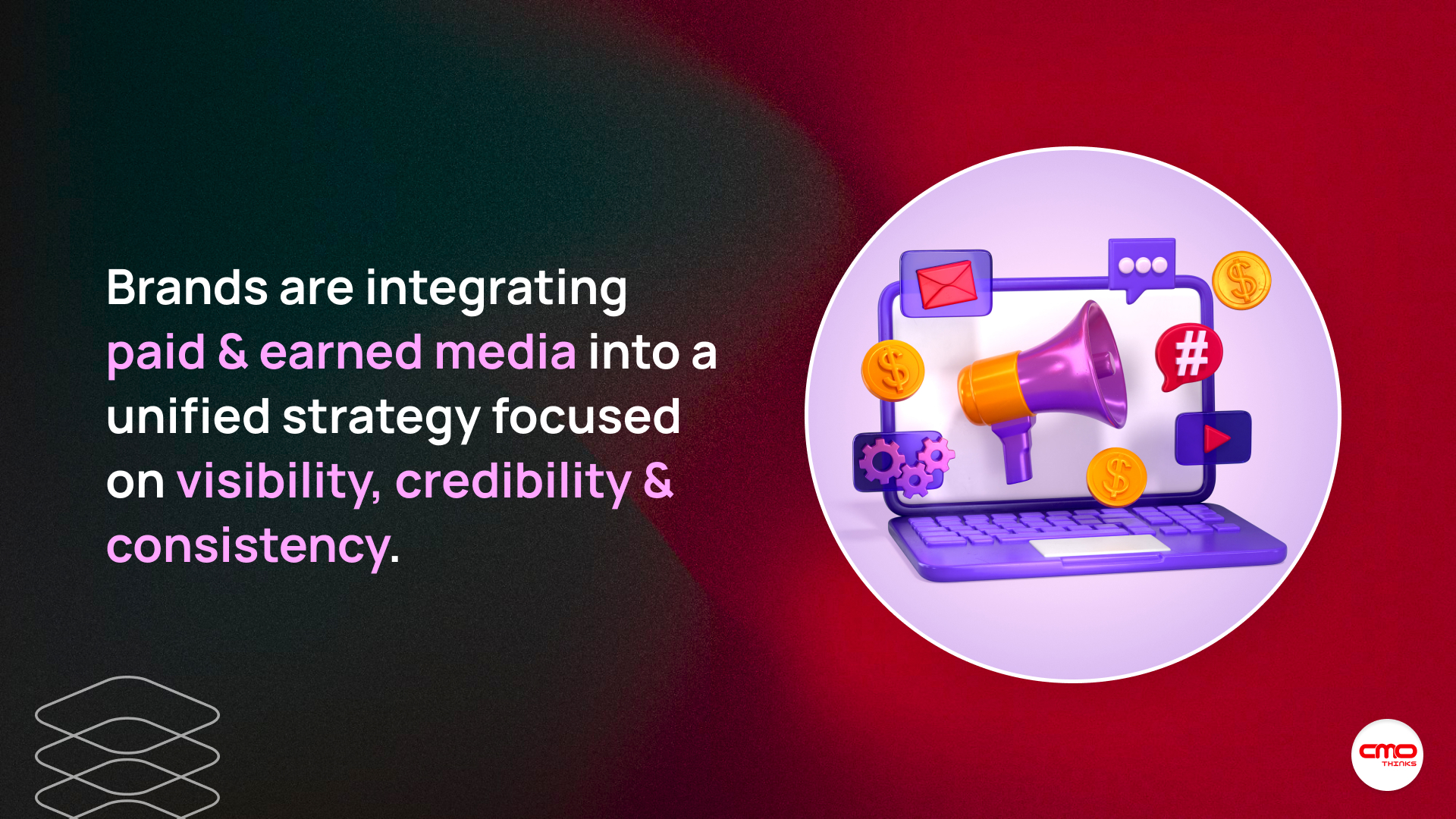
Rather than managing paid campaigns and earned media as separate efforts, brands are increasingly bringing them together into a unified hybrid strategy focused on visibility, credibility, and consistency.
Why Paid Media Alone Is Becoming Less Effective
Paid advertising still drives awareness faster than almost any other channel. But visibility without trust is a weak growth model.
Consumers today are far more skeptical of direct brand messaging. Before taking action, they look for external proof:
- Customer reviews
- Media coverage
- Industry recognition
- Social conversations
- Peer recommendations
These varied experiences now influence purchase decisions almost as much as the advertising itself.
This is why paid and earned media integration is critical for brand success today. Paid media creates attention, while earned media reduces doubt.
The idea aligns closely with Gini Dietrich's PESO Model® — Paid, Earned, Shared, and Owned media — which focuses on building integrated communication ecosystems rather than disconnected campaigns.
Credibility Now Impacts Performance Metrics
One of the biggest changes in digital marketing is that trust now directly affects performance outcomes.
Two brands may run similar ad campaigns with comparable budgets and targeting, but the brand with stronger credibility signals often performs better.
Why?
Because customers validate brands before converting.
A paid campaign may generate the click, but conversion frequently depends on what audiences discover afterward. Positive reviews, thought leadership, customer testimonials, and independent media mentions improve confidence during the decision-making process.
This directly influences paid media efficiency by improving engagement quality and reducing acquisition friction.
Research also supports this shift in behavior. As per a recent study, Gen Z consumers trust customer reviews more than influencer promotions or direct advertising.
For CMOs, trust-building has evolved beyond a branding exercise into a measurable performance driver.
That’s where a strong brand validation framework becomes important: ensuring every paid touchpoint is reinforced by authentic external credibility.
Marketing Channels No Longer Operate Independently
The traditional marketing funnel has become increasingly fragmented. A buyer may discover a brand through search ads, revisit through retargeting, encounter an executive’s LinkedIn content, and later engage with a webinar or industry article before making a decision. From the customer’s perspective, these interactions are not separate campaigns. They are one connected experience.
This is why cross-channel message alignment matters. When messaging changes dramatically across channels, trust weakens. But when every touchpoint reinforces the same positioning and narrative, brands create familiarity and consistency.
That consistency shapes the overall omnichannel customer experience.
Customers expect the same tone, messaging, and value proposition whether they interact with:
- Paid campaigns
- PR coverage
- Social media
- Email communication
- Website content
- Executive thought leadership
The brands creating seamless experiences across these channels are building stronger long-term customer relationships.
Content Should Create Long-Term Value
Another major shift happening in marketing is how brands approach content investment.
Instead of creating one-time campaign assets, companies are focusing on content lifecycle extension: repurposing high-performing content across multiple channels and formats.
For example, one earned media placement can become:
- Paid social creatives
- Retargeting campaigns
- Sales enablement assets
- Email nurture content
- Founder-led LinkedIn posts
- Webinar discussion topics
Likewise, original research reports or industry insights can generate both earned coverage and paid amplification opportunities.
This improves organic amplification ROI because content continues generating value long after the original campaign ends.
Modern marketing teams are evolving from content creators into builders of reusable credibility assets.
Relevance Is Replacing Interruptive Advertising
Audience behavior is also reshaping how brands think about targeting.
Consumers are becoming less responsive to aggressive promotional messaging and more responsive to relevance, expertise, and educational value. This has accelerated the shift toward value-based ad targeting.
Rather than focusing purely on product-led messaging, brands are increasingly creating campaigns around:
- Industry trends
- Customer pain points
- Educational insights
- Research-backed narratives
- Expert perspectives
This type of messaging aligns naturally with earned media and supports stronger engagement across channels.
It also contributes to faster conversion path acceleration because customers feel more informed and confident before making decisions.
The Future of Marketing Will Belong to Trusted Brands
As advertising grows increasingly crowded and AI-generated content saturates digital channels, trust is emerging as one of the most valuable competitive advantages a brand can build.
Over the next few years, the highest-performing companies won’t necessarily be those investing the most in media spend. They will be the ones successfully combining reach with credibility.
That is the real strength of a modern hybrid marketing strategy: integrating paid visibility with earned authority to create marketing that feels both scalable and believable.