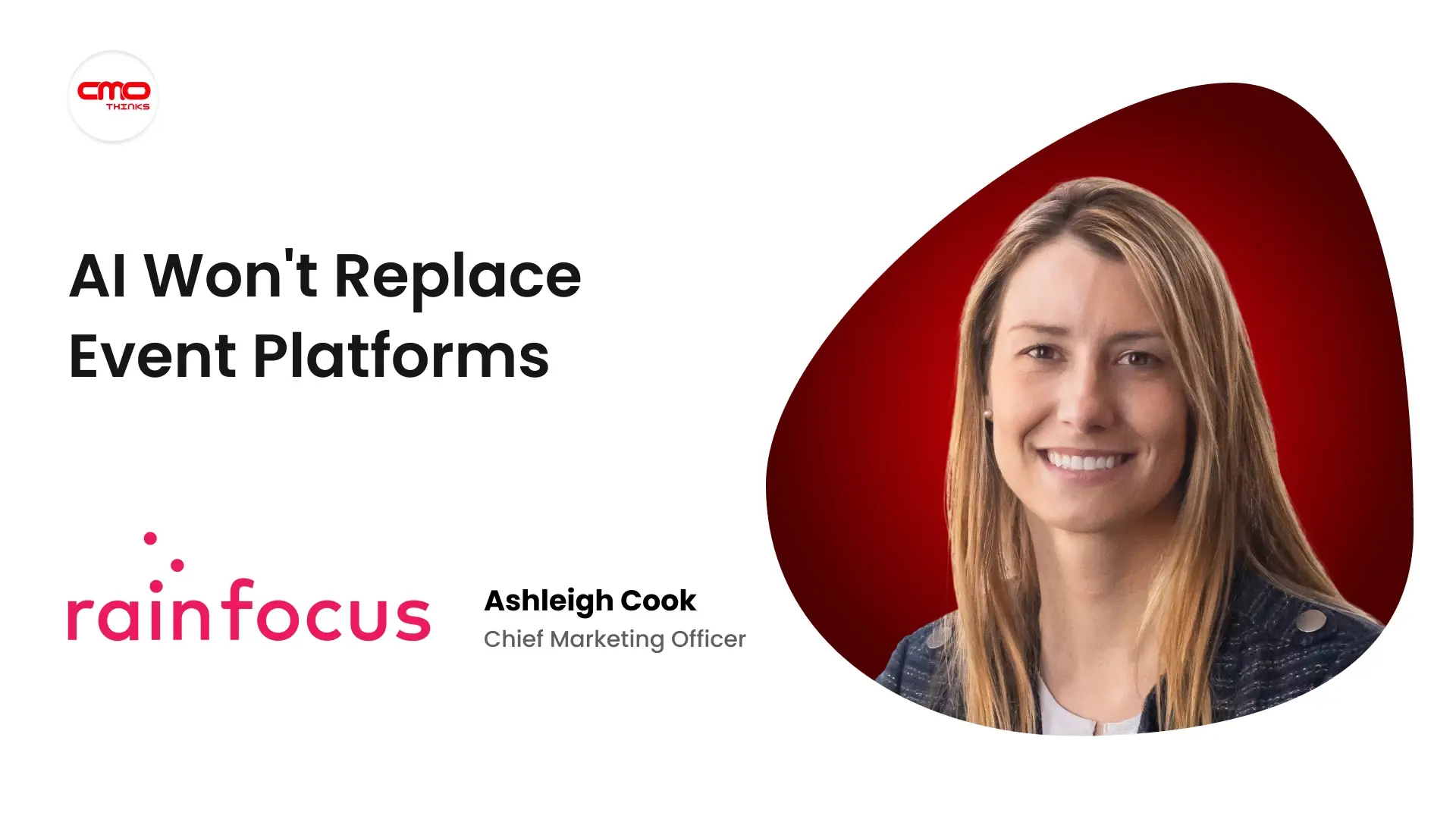
You've spoken about what's next for brands on the Deconstructing Data podcast. What's the biggest shift you're seeing in how B2B brands think about first-party data right now?
The biggest shift we are seeing is that brands are moving from just collecting first-party data to now putting it in action. For many years, brands have captured a plethora of data points that sit in dashboards or systems and get reported out to the business after the fact. Now, with a rapid rise in agentic workflows and MCPs, we are seeing teams acting on connected data in real time that is far more personalized than ever before. Organizations were only beginning to scratch the surface of these capabilities earlier this year, but adoption and innovation have accelerated significantly in just a matter of months. We are seeing those clients that are on the leading edge have clean and connected data to action on these in real time.
RainFocus sits at the intersection of events and data. What's the most common mistake marketing teams make when trying to treat events as a data source rather than a one-off activity?
Too often, organizations act on event data after the moment of greatest value has already passed. Treating events as meaningful sources of data rather than one-off activities is an important first step, but the real opportunity lies in activating on those signals in as close to real time as possible. We’re seeing the strongest impact when brands can identify audience intent in the moment and use it to shape the next interaction, driving more relevant engagement and stronger conversion.
It’s also important to reframe events not as isolated data-generating moments, but as touchpoints within the broader customer journey. That shift encourages brands to think more strategically about the role each event plays, what they want to learn from the audience and what action should follow based on those signals.
You moved from a Gartner internship into a strategic, data-driven marketing leadership career. What's a lesson from those early days that still shapes how you operate today?
I firmly believe that if you work hard, stay curious and build strong relationships with people across the business, good things will follow. Maintaining those connections and being open to learning from the people around you—whether they bring more experience, different skill sets or entirely different perspectives—can shape your career in ways you may not expect.
Even today, I look for opportunities to learn from others and stay curious. One of the biggest lessons I’ve taken with me is that success in business is often rooted in the relationships you build throughout your career.
You've moderated panels bringing together event tech leaders and industry voices. What's a debate in the event marketing space right now that you don't think has a clear right answer yet?
Something that has struck me lately is the challenge of finding the right balance between infusing AI into event programming and preserving the high-touch human engagement at a time when it is more valuable than ever. Layer in attendee privacy, data security and the right governance guardrails, and it becomes an increasingly complex conversation that many enterprise brands are still working through.
While organizations are eager to adopt AI, some are also taking a more measured approach by reconsidering where it adds the most value and how attendee data is being used responsibly and ethically. I’m finding that AI can be most powerful when it’s nearly invisible to attendees as it works behind the scenes to make experiences more relevant, seamless and personalized, while ultimately making the human moments matter even more.
What's the biggest blind spot marketing leaders have about their own event data before they start actually connecting it to revenue?
Event marketing leaders can miss the mark when they look at event data in isolation rather than as one integrated touchpoint across the broader customer journey, which may also include multiple digital engagements before and after the event. These signals are critical to building a more complete view of customer intent across the prospect funnel.
The challenge is that many organizations still have limited visibility into all of the buying group members who engage with key elements of an event program. In many cases, those individuals remain unidentified or disconnected from core systems of record, making it harder to understand the full scope of engagement and act on those insights effectively.
What's a piece of event marketing “best practice” that you think is actually outdated in a world of hybrid and always-on digital engagement?
In events, there’s often a temptation to save your best content for the biggest stage or the largest audience. We recently debated this in our Event Perspectives series, asking whether the keynote is underrated or overrated, and the answer really depends on the event’s goals and the audience you’re trying to reach.
I’d also add that the traditional promotion timeline many teams have relied on year after year is being completely reworked. As organizations run more events in tighter windows, attendees are also registering later. We’re seeing registration spikes become increasingly compressed, with more activity happening much closer to the event itself. That shift is forcing teams to rethink not only when they promote, but how they build momentum and create urgency in the weeks leading up to an event.
As RainFocus's own INSIGHT conference has grown, what have you learned running your own flagship event that changed how you advise clients running theirs?
For me, it all comes back to aligning on the goals and bringing cross-functional teams into the process early. When designing an event, it’s critical to stay focused on who you’re actually designing it for: the audience, not internal stakeholders.
Business objectives should absolutely guide the strategy, but they shouldn’t come at the expense of the attendee experience. Teams need to understand the personas they’re trying to reach, what those audiences genuinely want from the event and what will make the experience valuable to them. From there, the insights should be built directly into the programming, content and overall event design.
What's one prediction about the future of B2B events or event marketing technology you're confident about that most people in the industry would currently disagree with?
The market has been flooded with commentary that LLMs and AI agents will replace the need for event software as we know it. My prediction is that AI won’t replace event platforms, but will make the good ones more valuable than ever before. I’ve seen cases out there that LLMs and prompting can replicate what good software does and that may be possible in some use cases. The event platforms that will win are those that make their data most usable by AI. Enterprise events platforms require complex data governance, regional regulation compliance based on audience, systems integration and physical logistics in real time. Newer protocols like MCP raise the bar for what those platforms need to deliver and make the platform even more valuable. MCPs can make it easier for AI systems to access and act on event data, but the value of that intelligence still depends on the infrastructure and context underneath it. At the end of the day, technology that will rise to the top helps feed clean, actionable intelligence to an organization.