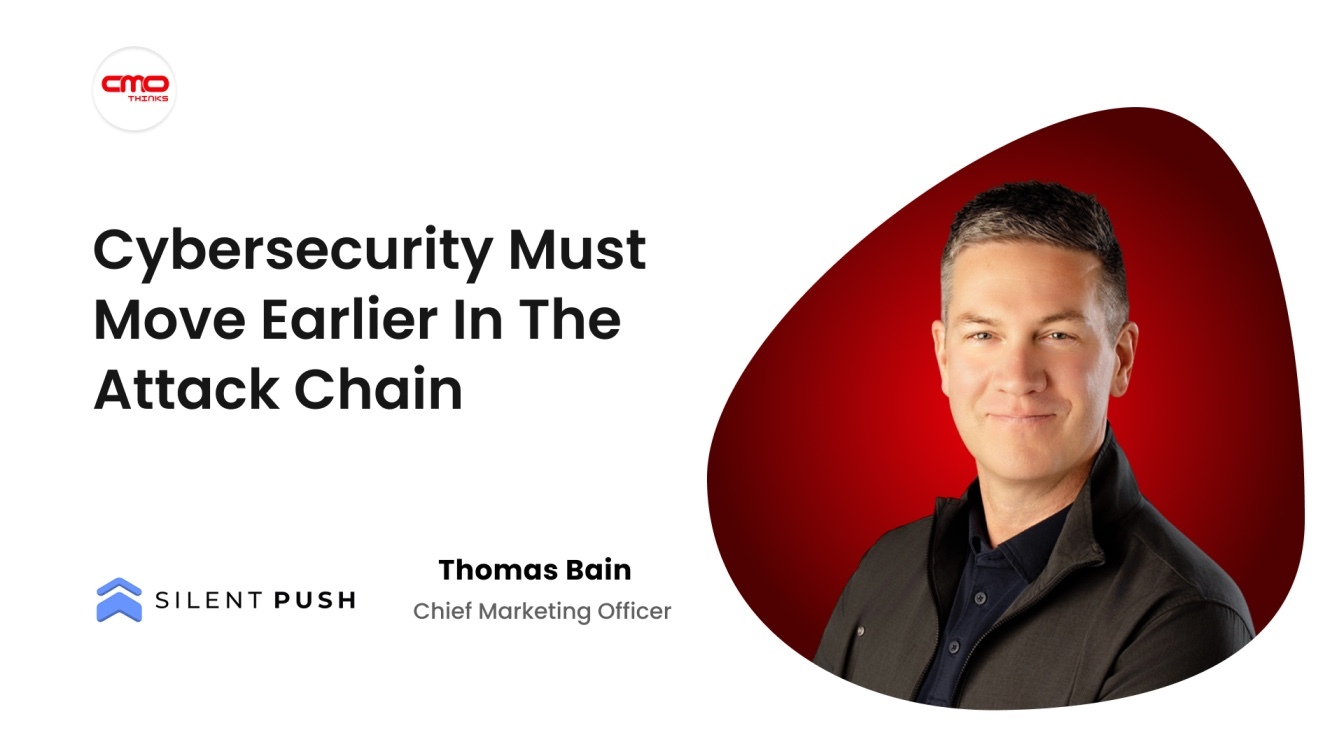
You've built a career around scaling cybersecurity businesses and bringing emerging technologies to market. What attracted you to Silent Push now, and what convinced you that preemptive cyber defense is a category worth betting on?
Throughout my career, I’ve been fortunate to work with companies that helped define emerging categories within cybersecurity. What attracted me to Silent Push wasn’t simply the technology, although the technology is exceptional; it was the opportunity to help shape what I believe will become one of the industry’s most important strategic shifts – preemptive cyber defense using internet infrastructure signals to know exactly how and through which IPs and domains based on origin and change.
For years, cybersecurity has largely been built around detection and response. Those capabilities remain critical, but threat actors continue to gain speed, scale, and sophistication. Organizations need the ability to identify and disrupt threats earlier in the attack lifecycle.
What convinced me that Silent Push is uniquely positioned to lead this shift is its ability to provide visibility into adversary infrastructure before attacks unfold. Innovations like Traffic Origin, which can reveal the true origin of infrastructure despite VPNs, proxy networks, and other obfuscation techniques, give defenders insight they simply haven’t had before – this is the fundamental shift that differentiates Silent Push from any other brand.
Silent Push's approach centers on giving organizations visibility into adversary infrastructure before attacks unfold. Why is this shift from reactive to preemptive defense becoming so critical for modern security teams?
Threat actors spend significant time preparing before they launch an attack. They register domains, build infrastructure, establish operational patterns, and test campaigns. Historically, defenders haven’t had visibility into much of that activity until after malicious actions begin – only minimally useful indicators, but mostly indicators that something’s already been compromised.
At the same time, security teams are being asked to defend increasingly complex environments with limited resources and no visibility that provides any sort of “way before the attack” signal that’s reliable. The result is a continuous cycle of alerts, investigations, and response activities that doesn’t ever give defenders an advantage – just chasing everything endlessly.
Preemptive defense changes that dynamic. Identifying emerging infrastructure and malicious intent earlier gives teams valuable time to assess risk, prioritize resources, and take action before threats impact the business.
As the threat landscape continues to evolve, I believe the ability to move earlier in the attack lifecycle will become a foundational component of modern cybersecurity programs.
As you begin shaping the next phase of marketing at Silent Push, what are your key priorities when it comes to communicating the company's value to security practitioners, CISOs, and business leaders alike?
One of my top priorities is ensuring that we communicate both the uniqueness of our platform and our data and the practical outcomes it delivers to ICPs we target.
Security practitioners want technical depth, transparency, and proof. CISOs need confidence that investments meaningfully reduce risk and maintain operations. Business leaders want to understand how security initiatives support resilience, operational continuity, and revenue growth.
Our responsibility is to connect those perspectives. We want to demonstrate not only how Silent Push provides visibility into emerging threat infrastructure, but also how that intelligence can be operationalized to help teams make faster, better decisions inside the workflows and tools they already use.
This means:
- Finding the buyers and equipping them with useful tools and use cases that resonate.
- Gaining players and coaches at large accounts in Commercial and Federal.
- Running programs across the marketing funnel to meet objectives and serve our audiences – not spamming them, but rather meeting them where they are in their buying journey, where they are physically on Earth, and where they are digitally.
Part of our responsibility is helping the market understand that preemptive cyber defense isn’t just another security product category or the latest in AI SOC detection but a radically different operating model for how organizations approach risk.
Ultimately, our goal is to help organizations understand that success isn’t about having more data. It’s about having the right intelligence at the right time so teams can act with greater confidence and effectiveness.
Many cybersecurity companies struggle to translate technical innovation into clear business outcomes. Across your career, what principles have consistently helped you bridge that gap and create messaging that resonates with buyers?
The most effective cybersecurity marketing begins with the customer’s challenges rather than the product’s capabilities – this helps you address pain points with a clear path to articulating your solution across real use cases.
Technical innovation matters, but buyers ultimately want to know how a solution helps them reduce risk, improve efficiency, accelerate investigations, or strengthen decision-making. If you can’t clearly connect innovation to outcomes, the message will struggle to resonate.
I’ve found that successful messaging consistently comes down to three things: clarity, credibility, and relevance. Clarity means making complex concepts understandable without oversimplifying them. Credibility comes from expertise, research, and customer validation. Relevance comes from understanding what buyers are trying to accomplish and speaking directly to those priorities.
Cybersecurity buyers are more informed, more skeptical, and often harder to influence than ever before. How do you think the buying journey has evolved, and what does that mean for how cybersecurity companies build credibility today?
Transparency is critical – don’t make your buyers have to dig and dig to figure out what it is you do, and don’t just latch onto buzzwords or trends. Today’s buyers complete a significant portion of their evaluation process before ever speaking with a vendor. They consult peer communities, analysts, threat research, customer reviews, and peers in their vertical to validate claims and compare solutions.
That means credibility has become one of the most valuable assets a cybersecurity company can build – as much as trust.
The best cybersecurity marketing today looks a lot more like education than promotion. Buyers are looking for evidence rather than promises. They want meaningful research, technical transparency, customer outcomes, and insights that help them make better decisions. And you can’t ignore the impact of AI, but don’t pin your brand to the next big thing in AI. It’s not creative.
Organizations earn trust by consistently contributing value to the market. The companies that stand out are those that educate, inform, and demonstrate expertise long before the buying process begins – which Silent Push does through its Community offerings and threat research.
Given your experience across cybersecurity, startups, and AI, where do you see the biggest opportunities for marketers today, and what misconceptions about AI are preventing organizations from realizing its full potential?
AI has the potential to transform how organizations operate, communicate, and make decisions. And it’s transformed the ease with which attackers can exploit things they see at scale when they train an agent. For marketers, the opportunities are significant, from accelerating content development and improving audience insights to increasing operational efficiency and personalization – but it has to be useful, and not fluff.
The greatest value comes from using AI to remove friction, accelerate workflows, and help people focus on higher-value work. Organizations that view AI as an amplifier rather than a substitute tend to see the strongest results.
The same principle applies in cybersecurity. AI can help analysts move faster and uncover insights more efficiently, but outcomes still depend on high-quality data, context, and human judgment. The future is about empowering experts with better tools, better intelligence, and faster access to answers rather than replacing them.
Lastly, what do you believe will most redefine cybersecurity leadership and market success over the next five years and why are so many organizations still unprepared for what's coming?
The next five years will be defined by speed, both for attackers and defenders. And by consolidation. There are too many cybersecurity companies, and the investment in AI-based cybersecurity has produced so much vaporware, in my opinion, and companies are being formed without a real thesis.
Threat actors are already leveraging automation, AI, and increasingly sophisticated infrastructure to operate at a pace that many organizations struggle to match. At the same time, security teams continue to face growing complexity across cloud environments, identities, third-party ecosystems, and emerging technologies.
The organizations that succeed will be the ones that can identify threats earlier, operationalize intelligence faster, and make decisions with greater confidence. In many ways, the competitive advantage in cybersecurity will increasingly come from how quickly organizations can turn information into action.
Five years from now, I think we’ll look back and wonder why organizations waited until an attack was underway before trying to understand the infrastructure behind it. The organizations that thrive will be the ones that identify and disrupt threats before adversaries have the opportunity to execute. Customers are the true measure of a company’s success. That ultimately is what sets you apart from competitors, so customer marketing is essential to scale the right use cases that will always separate the winners from the losers in the vendor ecosystem.