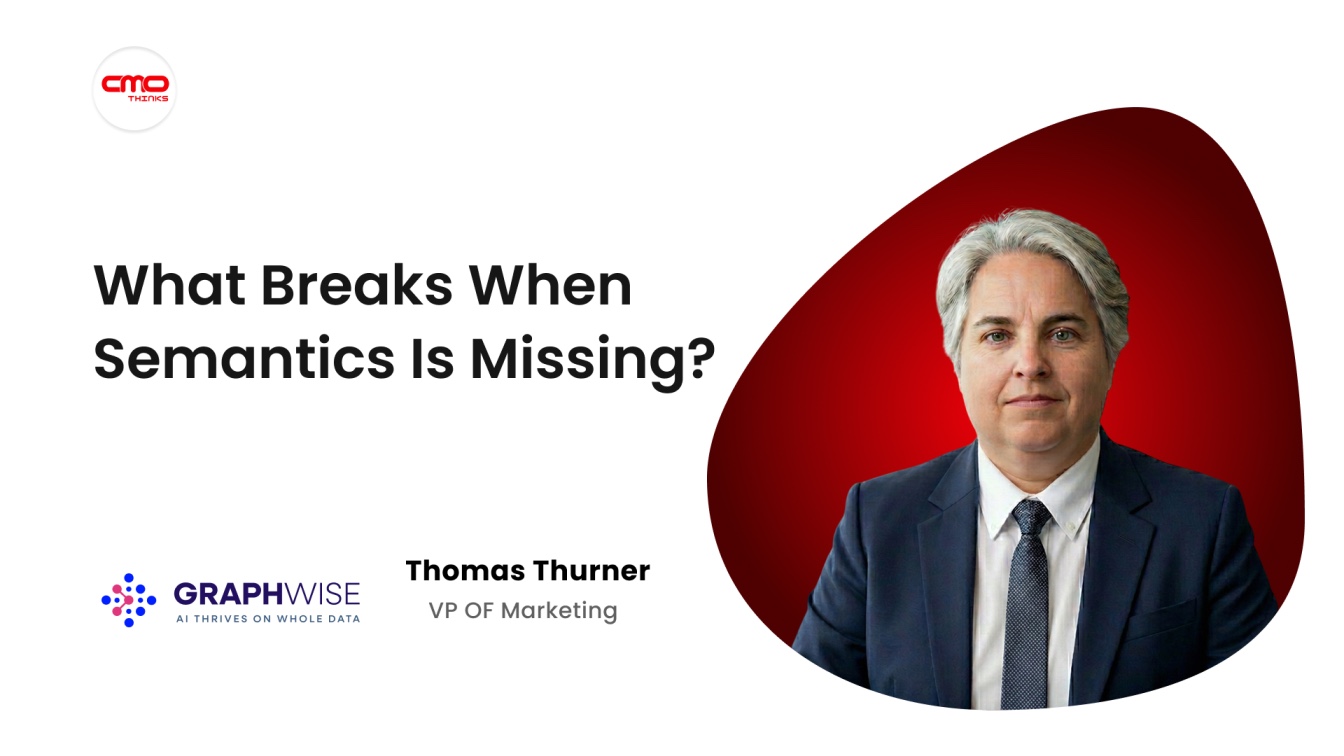
Graphwise sits at the intersection of data, semantics, and AI. As VP Marketing, what’s the hardest part of positioning such a foundational layer in the enterprise AI stack?
It is well known that companies' experiences with introducing AI have been marked by many disappointments. Now, it is important to build confidence in the next attempt, which, this time, with a sense of proportion and the right partner, will finally lead to the desired success. Also, because a foundational layer spans IT, data science, and the business, the challenge isn’t just articulating different value propositions — it’s demonstrating that the semantic layer is the connective tissue that makes AI deliver real business outcomes.
“AI-ready data” can mean very different things to different buyers. How do you bring clarity and specificity to that idea in your messaging?
It is helpful in this regard to have been in business for more than 20 years. When we talk about data and knowledge management, we know from countless integrations which multi-dependent data ecosystems our customers work with. And doing justice to this AI means using the knowledge we have gained about architecture, formats, use cases, and organizational conditions to tell the story of AI readiness.
In the context of AI hallucinations and unreliable outputs, how do knowledge graphs change the conversation around accuracy and trust?
From the perspective of telling a story, it's simple—because AI can be helped to avoid hallucinations by feeding it with structured knowledge through a graph. Much like human thinking, a knowledge graph shifts the idea from AI that guesses to AI that references. So this is as logical in the narrative as it is effective in its implementation.
“Single source of truth” is an overused phrase. How does Graphwise explain what that actually means in practice, especially in large, complex enterprises?
I'm not so sure that the term is overused. I think that right now, especially with the current technological trends and the often contradictory sources, a single source is taking on a new and important role again. Not least because RAG applications are said to be “grounded in truth.” And this grounding in a clear and verifiable reference system is of great importance for (re)establishing trust in AI.
In a market overcrowded with AI promises, how do you establish Graphwise’s credibility early in the buyer journey?
Making promises is one thing, proving them is another. Even if there is still a lot of early adaptation, hype, and euphoria in the air, we can now speak from our own experience, our own customers, and the discourse. And in this down-to-earth dialogue, I believe we can create the credibility that is needed.
What role does thought leadership play for Graphwise — brand building, demand creation, or customer validation?
AI is still a topic for implementers, innovators, builders, and solution seekers. Thought leadership is the link to the discussions that drive developments forward. To sell a knowledge product, you have to engage in knowledge exchange. Being heard is everything! Thought leadership is an important channel for this.
As enterprises mature in their AI adoption, how do you expect the role of semantic technologies—and the way they’re marketed—to evolve over the next few years?
In the 25 years that we have been working with semantic technologies, there have been many ups and downs. More than once, the end of the technology was predicted. Not least with the emergence of powerful language models, the swan song was sounded. However, we are now seeing a renaissance of semantics, as it can make a significant contribution both in making content available for AI and in optimizing outputs. Even at Graphwise, we are surprised at how clearly semantic technologies are catching up in the middle of AI developments. Semantics is now fully here, and it is here to stay.