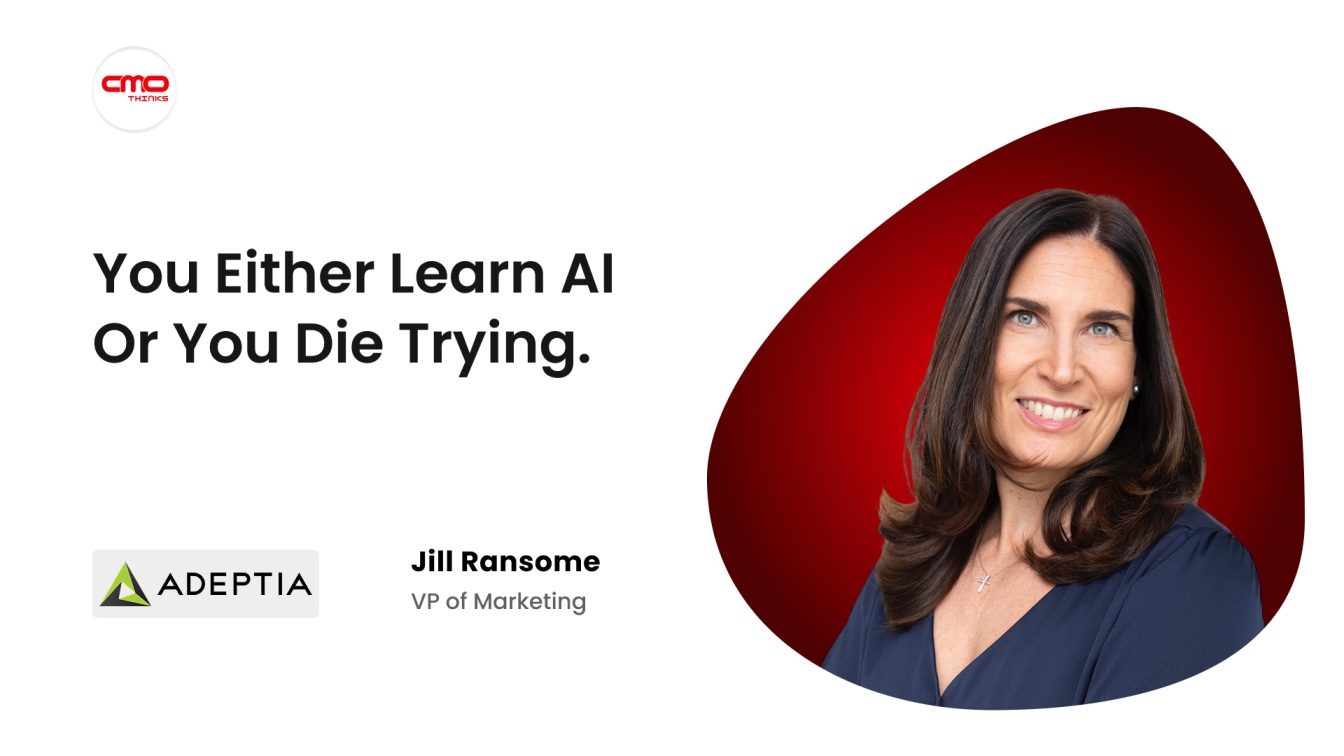
Your career spans SaaS, healthcare technology, fintech-adjacent environments, and enterprise platforms. Looking back, what experiences have most shaped your approach to building growth-focused marketing organizations?
The common thread throughout my career has been helping organizations translate complexity into growth.
Whether I was marketing healthcare technology, integration platforms, enterprise software, or highly regulated solutions, success didn’t come from having the best technology. It came from building alignment across marketing, sales, product, customer success, and executive leadership around a shared understanding of the customer and what they care about—outcomes.
One of the biggest lessons I’ve learned is that growth comes when you can build this alignment as a system. Brand, product marketing, demand generation, customer marketing, partnerships, and sales enablement cannot operate as separate functions. They need to come together to create a connected go-to-market engine in which every team understands how their work contributes to revenue, retention, and customer value, and works toward a common goal.
I’ve also learned that sometimes you have to get uncomfortable. Marketing leaders need to be adept at discussing pipeline, positioning, customer experience, and business strategy. The most effective marketing organizations combine creativity with operational rigor and maintain a relentless focus on measurable contribution.
Throughout your career, you’ve led organizations through periods of rapid growth, acquisitions, and transformation. What are some of the biggest challenges marketing leaders face during these transitions, and how can they successfully navigate them?
Periods of transformation are filled with competing priorities. Teams are trying to integrate and launch products, align messaging, preserve culture, build pipeline, and support customers simultaneously.
One of the biggest mistakes organizations make is assuming that growth automatically creates clarity. It’s often the opposite—confusion about where to focus.
Marketing leaders must become stewards of focus. That means establishing a clear narrative, aligning teams around a prioritized set of objectives, and creating transparency around what matters most. During acquisitions or transformation initiatives, customers and employees need confidence that the company has a clear direction.
I’ve found that successful transitions come down to communication, prioritization, and execution discipline. Organizations that can articulate a compelling vision while maintaining consistency tend to emerge stronger and better positioned for the long term.
You have a strong track record of turning complex products into commercial growth engines. What strategies do you use to simplify technical value propositions and make them resonate with both business and enterprise buyers?
The first step is shifting the conversation from features to outcomes.
Product teams naturally talk about architecture, capabilities, and specifications. Buyers care about results—or “what’s in it for them.” They want to know how a solution reduces risk, improves efficiency, accelerates revenue, lowers costs, or creates competitive advantage.
I typically start by working with customers, sales teams, and product leaders to understand where the solution creates measurable value. You have to be able to answer why someone should care. From there, we build messaging frameworks that connect technical capabilities directly to business outcomes.
For enterprise buyers specifically, it’s important to address both audiences. Executive stakeholders need to understand strategic value and ROI, while technical stakeholders need confidence in scalability, security, interoperability, and implementation.
The most effective messaging creates a bridge between those two perspectives, and it needs to be easy to understand and relate to.
As CMO/VP of Marketing at Adeptia, what attracted you to the company, and how do you see its Intelligent ETL platform differentiating itself from traditional integration and ETL solutions in today’s market?
What attracted me to Adeptia is a combination of the people, the problem it is trying to solve, and the timing.
I've worked with Charles Nardi, CEO of Adeptia, before (through the M&A between Zudy and Jitterbit), so I had firsthand visibility into how he thinks, builds, and leads. That history matters to me.
Beyond the relationship, I'm drawn to opportunities that have a few things in common. There's real chaos to navigate, meaningful work to build, and the ability to look back in six months and see what you've created. I'm also energized by growth-stage transformation. It is a period when strategy requires fast, nimble execution, and you can feel momentum shift in real time.
However, I’ve also learned that energy without a strong product foundation is just noise. What makes Adeptia compelling is that its product-market fit is already proven. The customers are real, the use cases are validated, and the category narrative around Intelligent ETL is differentiated and ready to be claimed.
The problem itself is one of the most consequential in enterprise technology today. Organizations have invested heavily in data infrastructure, yet many still struggle with fragmented systems, manual processes, and data that is not truly usable for the AI initiatives they want to pursue.
Adeptia’s Intelligent ETL approach combines automation, AI, and accessibility to help organizations connect, transform, and activate data more efficiently. The focus is on making trusted, business-ready data available faster and at scale so operational teams can execute effectively. Adeptia is uniquely positioned to help organizations unlock greater value from their data investments.
AI is rapidly reshaping marketing, customer engagement, and business operations. From your perspective, how is AI transforming go-to-market strategies, and what changes should marketing teams be making today to stay ahead?
Here's the thing about marketing and evolving technology: this is not new.
I've been in marketing long enough to remember when email was going to change everything, then social media, then mobile, and later martech stacks that required dedicated operations teams. Every few years, the landscape shifts, and marketing teams face a choice: adapt or become irrelevant. Historically, marketers have been among the most adaptable professionals in any organization.
AI is different in terms of scale and speed, but the instinct to embrace change remains the same. Organizations no longer have the luxury of waiting to see how it plays out. Teams need to learn, experiment, and integrate AI into how they work.
We're already using AI across marketing for content development, audience intelligence, campaign optimization, and competitive analysis. The efficiency gains are real. Work that once took days can now take hours, and insights that required dedicated analysts can surface instantly.
However, the larger opportunity is not speed—it is decision intelligence. Historically, marketing teams relied on broad segmentation and retrospective analysis. AI enables teams to become more predictive, personalized, and precise about where they invest and why.
The go-to-market teams that will lead in the coming years are those that stop treating AI as a separate initiative and start embedding it into daily operations. That means building AI literacy across the organization, modernizing data foundations, and focusing on use cases that create real customer value rather than simply looking impressive in presentations.
Creativity and strategic thinking still come from people. AI simply accelerates execution.
You’ve consistently focused on measurable business outcomes, from pipeline growth to revenue expansion and customer retention. What metrics do you believe are most important for marketing leaders when evaluating the success of modern GTM programs?
Marketing metrics should always connect back to business outcomes.
While engagement metrics have value, they are rarely sufficient on their own. I focus on a balanced scorecard that includes pipeline contribution, revenue influence, customer acquisition, retention, expansion, and overall brand affinity.
I also pay close attention to conversion rates throughout the buyer journey because they often reveal where friction exists within the go-to-market process.
One metric I believe deserves more attention is pipeline quality. It is not enough to generate volume. Marketing leaders need to understand whether they are creating opportunities that align with ideal customer profiles and have a realistic path to revenue.
Ultimately, the goal is to measure marketing as a strategic growth driver that contributes directly to business performance rather than evaluating it in isolation.
Enterprise organizations often struggle to balance innovation with compliance, security, and operational reliability. How can businesses accelerate AI and automation initiatives without compromising governance and trust?
I'll be honest: governance, compliance, and security are not areas where I operate day-to-day. That conversation is best addressed by product and engineering leaders who can provide deeper technical insight.
What I can speak to is what I see from a go-to-market perspective and what I hear from customers and prospects. The tension between moving fast and staying secure is real, particularly in industries such as insurance, financial services, and healthcare, where the consequences of getting it wrong can be significant.
When speaking with operations leaders in these sectors, trust is not simply a feature on a checklist. It is a prerequisite. If organizations cannot confidently address questions around governance and security, the broader conversation rarely progresses.
That is why human alignment remains critical. Bringing legal, IT, and compliance stakeholders into discussions early—rather than after solutions are already built—is not merely a technology decision; it is a cultural one.
From a marketing perspective, responsible AI is becoming a key differentiator. The question used to be, “Can your platform do this?” Increasingly, it is, “Can your platform do this, and can we trust it?” Those are fundamentally different questions that require different answers.
Looking ahead, what are your top priorities for Adeptia, and what opportunities do you see emerging at the intersection of AI, enterprise data automation, and digital transformation?
My immediate priorities are centered on strengthening Adeptia’s market position, increasing brand awareness, accelerating demand generation, and helping customers understand how AI-ready data can unlock meaningful business value.
We are entering a period in which organizations recognize that AI success depends on the quality, accessibility, and reliability of their underlying data. The conversation is moving beyond experimentation toward operationalizing AI at scale, creating a significant opportunity for companies like Adeptia.
Organizations need trusted ways to connect systems, automate data processes, eliminate silos, and make data available when and where it is needed.
I believe the next phase of digital transformation will be defined by intelligent data automation. Companies that can create seamless, governed, and AI-ready data ecosystems will be better positioned to improve customer experiences, accelerate innovation, and gain competitive advantage.
Adeptia is well-positioned to help organizations make that transition.