You’ve worked across Microsoft, consulting, partnerships, sales and marketing. As AI has become a priority for industrial and manufacturing organizations, what has stayed constant in how you think about growth and what has changed?
Growing a technology business still starts with a deep understanding of the reality facing your customers, including the work they’re trying to do, the constraints they operate under, and the outcomes they’re accountable for. This applies regardless of where we are in the technology adoption cycle, including today’s AI growth cycle. You can’t sustain growth if you’re not solving a real problem in a way that users trust and can easily implement in their daily work, no matter how advanced or sophisticated the technology. At Seeq, that means staying grounded in the expertise of the people closest to operations and building around the workflows that help them make their most important decisions.
What has changed for this current cycle is the speed of customer expectations and the tools available to solve problems. Having spent almost three decades working in tech, the pace and rate of change has never been faster. AI has transformed how industrial organizations want to learn, decide, and act. It’s also changed the conversation from “Can this technology do it?” to “Can I trust it, can I scale it, and can I do it without losing the human expertise that makes these organizations run?” That’s a meaningful shift, and it requires a very disciplined approach to growth, one that is customer-led, proof-driven, and focused on real outcomes.
You know Seeq from both the ecosystem and go-to-market sides. What does that vantage point reveal about where the company can create the most value today?
My role at Seeq gives me a broad view of how Seeq can deliver value and drive the biggest impact: by helping industrial teams turn data into trusted decisions, and then action. A lot of companies tend to talk about analytics or AI in the abstract. Seeq is differentiated because it sits much closer to the operational reality where context, expertise, and repeatability matter. It has been valuable that Seeq started as, and still is, a user-driven apps company. It is software that lives on the screens of operational experts as they go to work every day. This additional layer of industry insight is especially critical in factories or in the field where high-risk decisions are commonly at the core of all operations, not only for business outcomes, but also for safe and sustainable conditions.Seeing the market from both sides also highlights Seeq’s unique role in the ecosystem. Industrial organizations are dealing with increased complexity, volumes of data, and pressure to do more with less. What they need are technologies that respect how work actually gets done and help scale institutional knowledge without cutting out the “human in the loop.” That’s where Seeq can create outsized value today.
Where are you seeing the biggest pressure points for industrial organizations right now, and how is Seeq responding through its technology and solutions?
Efficiency is an obvious pressure point as industrial organizations are rapidly adopting tech to streamline their operations, but a bigger, less-known pressure point is the growing loss of institutional knowledge happening alongside digitalization. Industrial organizations simultaneously face increasing retirements, leaner teams or workforce shortages, and growing complexity in their operations, which means if they don’t capture employee and engineering expertise to pass on to the next generation, they lose a significant amount of intangible but highly valuable human capital. These organizations also face intense pressure to improve productivity, reliability, and sustainability without adding new layers of complexity.
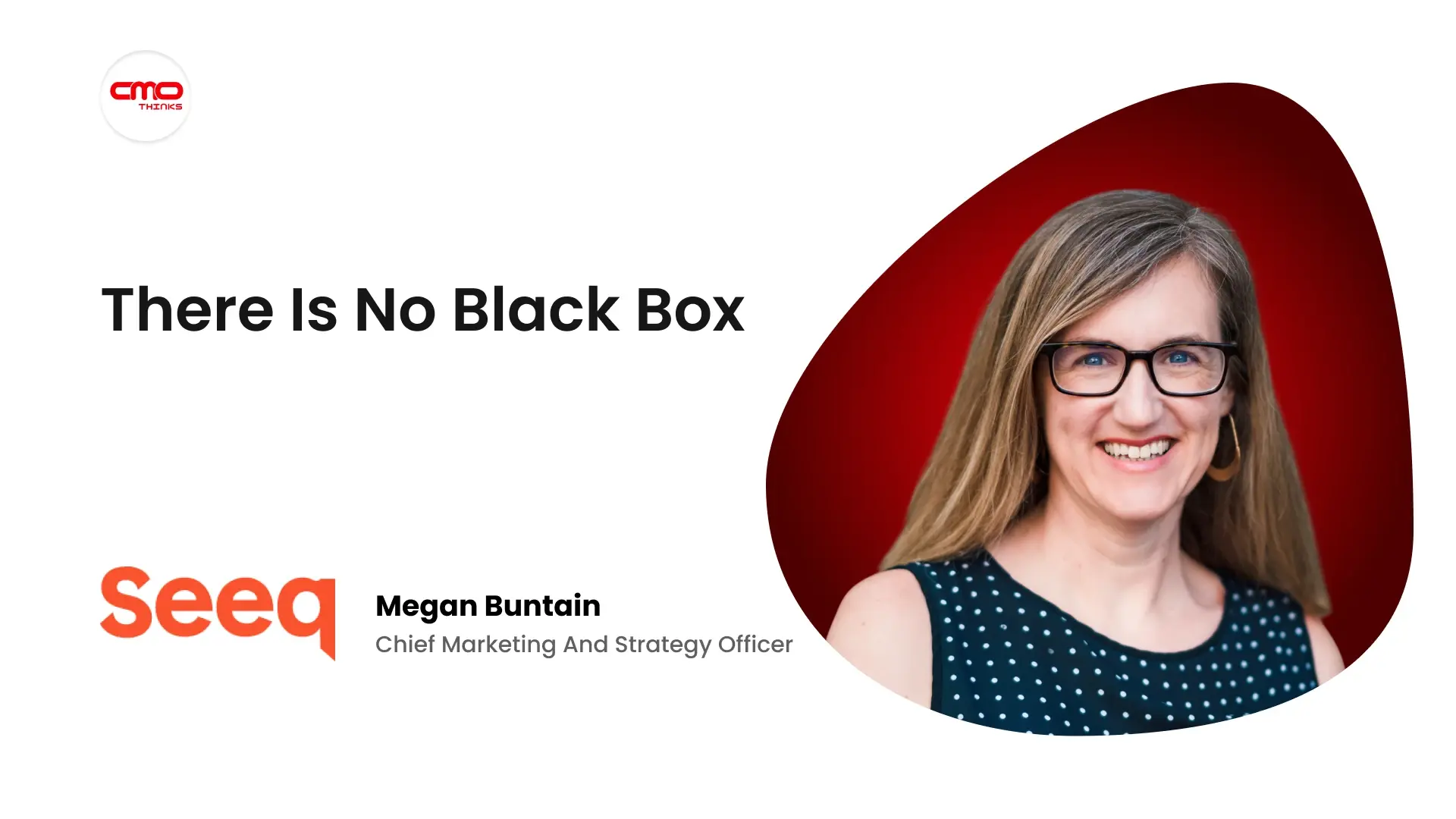
At the same time, there’s a real trust gap around AI. In industrial settings, people want AI that augments expertise, not replaces it. They want transparency, traceability, and confidence in the outputs of their AI tools. Seeq is responding by making AI and analytics more transparent and human-centered, helping teams codify expertise, share it across sites, and use it in workflows they can trust. It’s a fundamental principle at Seeq that all the data, calculations, models, decisions and actions taken are traceable. There is no ‘black box’. The goal is to free engineers and operators to spend less time wrestling with data or working to understand if the outputs of a model can be trusted and more time solving problems.
As CMO and Chief Strategy Officer, how do you keep marketing close to what customers are actually experiencing, not just what the market is talking about?
Our team prioritizes listening to my customers, first and foremost. The market is always full of noise, especially right now around AI, but customer realities are much more specific. We stay close to customers by spending time with them, understanding how they work, where they’re making progress, where they’re struggling, and what kind of reassurance they need before they will implement a new tech solution. That discipline helps us keep our messaging rooted in real experience rather than category hype.
It also means we don’t treat marketing as a layer on top of the business—it is connected to product, strategy, customer success, and our broader partner and customer ecosystem. The best stories come from real outcomes and real adoption, not from clever language alone. As CMO, I’ve always believed that every company has a choice to make when considering what or who is the ‘hero’ of their message. Typically, the choice is amongst three options - ‘the product’. ‘the team’, or ‘the customer.’ At Seeq, we have definitively chosen the customer to be the ‘hero’ of every story we tell. If we can’t connect the message to what customers are actually doing, then it’s not useful.
How do you make Seeq’s value resonate with an operator, a technical leader, and a business executive simultaneously?
At the center of our story is a simple idea: Seeq amplifies human expertise with industrial intelligence so teams can turn insights into action. From there, we tailor the message to who we’re speaking to. For operators, it’s about making work easier and decisions faster. For technical leaders, it’s about access, scalability, and trust. For business executives, it’s about measurable outcomes, like better uptime, stronger productivity, improved reliability, and more sustainable operations.
The key is not to oversimplify, but to stay concrete. Industrial buyers are pragmatic. They want to know what changes in their day-to-day work, and they also want to understand the enterprise impact. Our job is to bridge those two levels clearly and credibly.
What are you watching most closely right now: a change in industrial technology, buyer behavior, the competitive landscape, or something else entirely?
I’m watching the intersection of all three, but especially buyer behavior. AI has changed expectations dramatically, and buyers are more aware than ever of what’s possible. At the same time, they’re also more cautious about what they can trust and what will actually work in complex industrial environments. That tension is shaping how companies evaluate vendors, how quickly they move, and what they expect from a partner.I’m also watching how the market defines value. In industrial software, organizations that set the pace for industry adoption don’t need a loud AI story, they need to actually demonstrate that their technology preserves expertise, improves outcomes, and scales in a way that feels practical and credible. That’s where differentiation will matter most.
When you look five years ahead, what would have to change in industrial organizations for you to say, “Seeq didn’t just participate in this transformation; we helped redefine it”?
Looking ahead, I’d want to see industrial organizations using AI and analytics in a way that is fully embedded in how decisions get made, not as a side project, but as part of their operating model. If organizations are capturing institutional knowledge, scaling it across teams and sites, filling critical gaps in their existing workforce and workers’ knowledge, and helping people make faster, better, more confident decisions because of it, then I’d say we helped redefine the model.
For me, that transformation is really about human and machine working together more effectively. If Seeq helps industrial teams preserve expertise, apply it at scale, and free people up to focus on higher-value work, then that’s a meaningful legacy. That’s when technology stops being just a tool and starts changing how the industry operates.