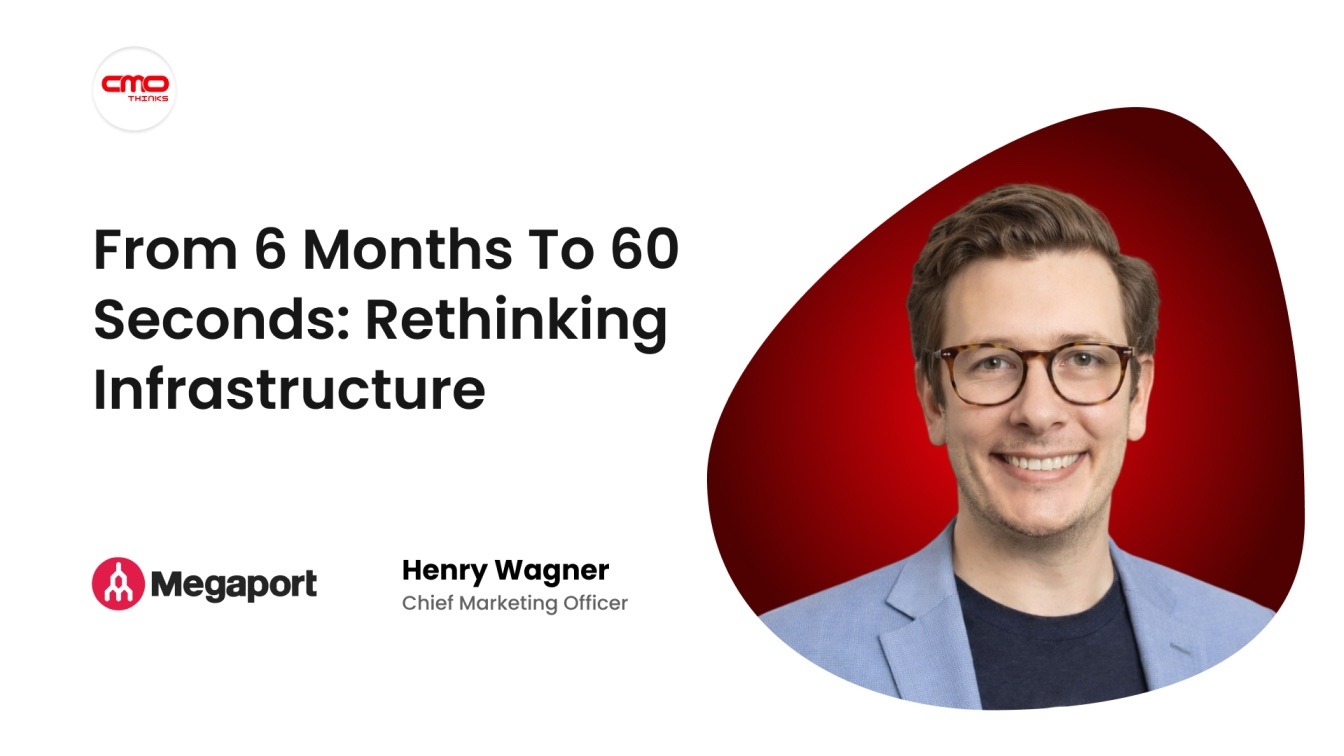
You started in architectural design before spending nearly two decades in telecom and SaaS marketing. What has this unique journey taught you about solving business problems, and how does it influence your marketing approach at Megaport?
Architecture was a great background to marketing because it teaches you to do two things:
- Think laterally. When you are planning campaigns, you might need to come up with 50 ideas before you have a good one. Architecture is very good at getting you to come up with new ideas, and not being precious about a select few that maybe don’t work as well as you had hoped.
- Think logically. You need to be able to execute. The best idea is only an idea until it’s done. You can’t actually refine creative concepts to the point where you can execute them unless you are able to think with rigorous logic about everything.
When you sit down with enterprise customers, what's the frustration you hear most often about cloud connectivity and infrastructure? And why do you think organisations are still struggling with it despite years of cloud adoption?
The most consistent issue I hear is the different level of understanding between the people deploying the infrastructure and the people making the decisions. Some companies “get it” and they treat their network teams, DevOps teams, etc. as revenue enablers, but at most companies they are still viewed primarily as a cost. In that kind of environment, lowest cost almost always wins. Low cost doesn’t mean inherently bad, but it often does mean tradeoffs against capability.
If you had just two minutes with a CIO evaluating Megaport for the first time, what wouldn't you talk about and what conversation would you insist on having instead?
Our deployment time is 60 seconds for network and ~5 seconds for compute, so I’d probably just demo provisioning a couple of services to them. Most CIOs still think of infrastructure as this thing that takes 6+ months to roll out. It really doesn’t have to be. Once they see it, they usually get it.
Tech marketers often get caught between technical accuracy and business storytelling. When those two pull in different directions, which one wins, and how do you avoid compromising the other?
I have a saying with my team: “We do science at Megaport, not alchemy.” Storytelling is great, as long as it is built on a solid foundation. But if it’s just fluff, then it’s only going to work for so long. Ultimately, accuracy has to win, but it’s incumbent on marketers to make sure they can explain the complexity. If you can’t do that, then you might not be around by the time accuracy wins out. In the long run, to be really successful, you need to understand how and when to wield both.
Infrastructure decisions aren't made overnight. How do you keep Megaport's marketing relevant throughout buying cycles that often stretch over months?
It’s really hard. Probably one of the hardest things in B2B marketing. The key is listening. When you have a big blob of anonymous traffic, you need to interrogate and “listen” to that data. When it gets de-anonymised, you need to find out everything you can about that person’s use case, their company, and their pain points. As soon as you think that they are warming up, you need to tag in a human from your sales team, because all the data points in the world can come up short when you start applying them to individuals and their own personal anecdotes or journeys.
Great marketing isn't built in the marketing department alone. Which internal partnership has the biggest influence on your team's success, and why has it become so critical?
Definitely sales. Almost everything we do is filtered through that team before a customer purchases. If you aren’t lockstep with your sales team, you are going to fail as a marketer. My advice to every new marketer at a company is to sit in on as many sales meetings as they can. You’ll learn more about what is going to work in 5 sales meetings than you’ll learn in 5 years sending emails from Marketo or Pardot.
Ten years from now, beyond growth, products, and market share, what's the chapter you'd most want people to write about Megaport?
We’re an automated infrastructure company, and infrastructure can be really interesting if you look at it from the right angle. But usually it’s what other people do with the infrastructure that is more interesting. I’d love to see an article about how someone was using our infrastructure to help put people on Mars. I’m a sucker for rockets.