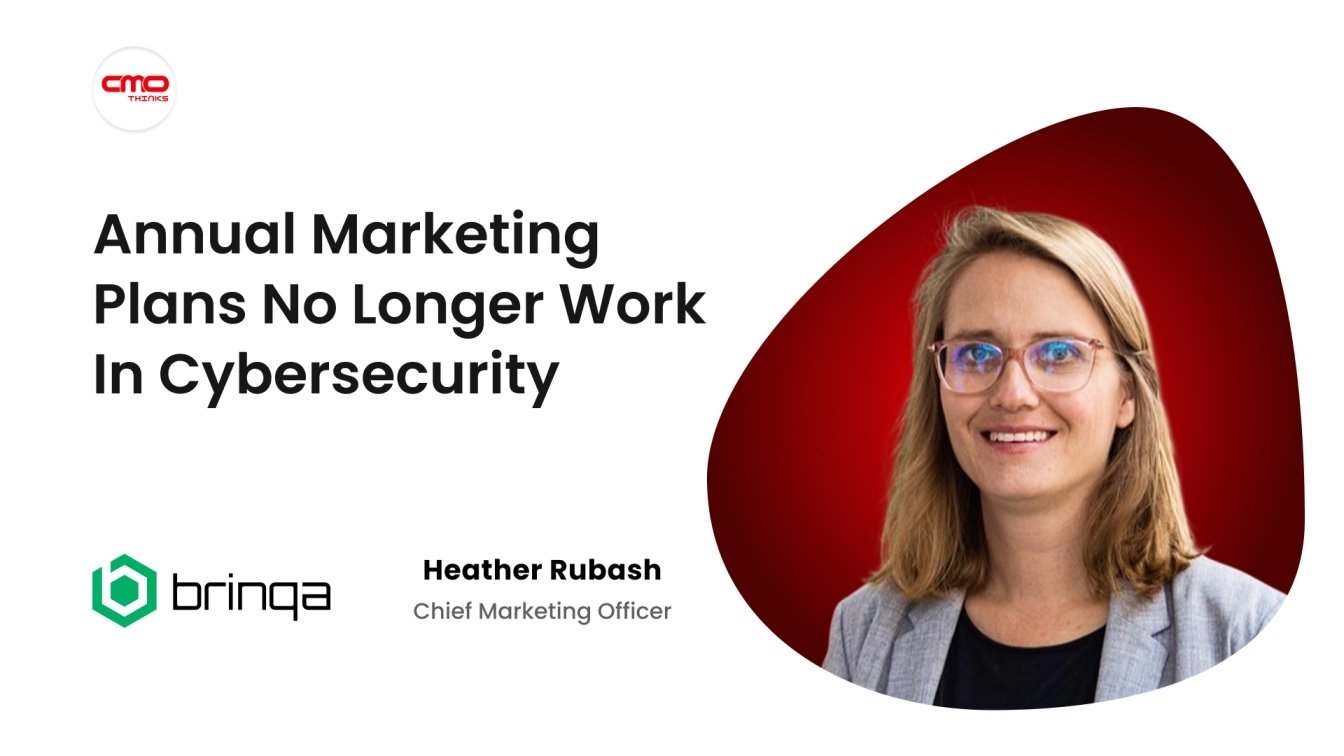
You've led marketing through high-growth phases, acquisitions, leadership transitions, and market expansions. Looking back, what experiences have most shaped your leadership?
I've worked for great leaders and I've worked for difficult ones, and honestly both taught me something. The high highs showed me what's possible when a team trusts each other and moves fast together. The low lows taught me just as much, maybe more, about the kind of leader I never wanted to be. Every hard boss, every chaotic reorg, every miscommunication that slowed the team down, all of it shaped how I want to show up for my team every day. I try to lead with the same clarity and respect I’ve wanted and thrived on throughout my career.
You've built and managed teams across nearly every marketing discipline. How has your perspective on the role of a modern CMO evolved over the past decade?
Ten years ago, very few people were thinking about or predicting how we would hit this inflection point where AI would change everything about this job, the team structure, the strategy, how we execute, etc. The biggest shift I've seen is that CMOs can't just set an annual strategy for their teams to execute, we have to be hands-on ourselves and willing to pivot.
Early in my career, I worked for companies that would conduct annual marketing planning in Q4 and execute on that plan exactly as planned in the following year. I can’t see how that’s possible anymore, at least at the high growth companies I’m working for. A tactic that's driving brand awareness and pipeline today isn't guaranteed to work in six months (or less!). Being a good marketing leader now means staying flexible enough to change course quickly, and being honest with yourself, your team and your board when something isn't working anymore. Be open and pivot quickly.
I also believe you have to be in the tools, testing what works, and bringing that back to your team to create a culture of exploration and experimentation, not only with AI, but with everything across the marketing program.
You often talk about bridging the gap between brand and demand. Why do you believe many B2B organizations still struggle with balancing these priorities?
At the end of every quarter, every CMO has to walk into a board meeting and talk about pipeline. That pressure is real and it's not going away. Attribution for brand work is genuinely hard to prove, so it's easy for brand investment to get deprioritized in favor of things you can point to on a dashboard. However, while brand investments can’t be fully attributed, the job of brand work goes beyond pipeline; when it’s built right, it’s part of what drives the trajectory to an IPO or acquisition. It’s bigger than pipeline creation.
But in cybersecurity specifically, I think brand is becoming more important, not less. Buyers are more skeptical, deals take longer, and trust gets built long before a rep ever gets on a call. Solving for both brand and demand at the same time is hard, but it's the job.
As cybersecurity buying committees become larger and more technical, how has that changed your approach to messaging and go-to-market strategy?
This trend has been building for a while, but it's only accelerating. We can't just speak to the CISO or VP anymore. The technical teams who will actually live in the product every day are just as much a part of the buying decision, and they're often the ones who can kill a deal if they don't trust what they're seeing.
That means our messaging and marketing strategy has to work at every level of the org. We need content that resonates with the executive setting strategy and the practitioner who's going to be running the platform day to day. If either group feels like the message (and product) wasn't built for them, we lose credibility with the whole committee.
Marketing is increasingly expected to contribute directly to revenue. Which metrics do you believe best reflect marketing's business impact beyond traditional lead generation?
I don't report on MQLs to my board. If marketing hits its MQL number and sales still misses the quarter, that number means nothing. I care about the health of the full funnel, from top of funnel through conversion rates, pipeline velocity, all the way to closed-won, especially on marketing-originated opportunities.
Beyond the funnel, I also look at things that don't show up neatly in a dashboard but matter just as much: are we showing up in the right analyst reports, do we have the right presence at the events our buyers actually attend, are our social campaigns building real awareness with the right audience. Revenue is the outcome, but the inputs that build long-term pipeline health matter just as much to how I evaluate the team.
AI is reshaping both marketing operations and cybersecurity. How are you leveraging AI internally to improve marketing efficiency while maintaining authenticity and trust?
We're using AI across nearly everything we do in marketing and marketing ops. But I'm a strong believer in keeping a human in the loop, especially at the start of any new AI-driven project. If AI is drafting outreach emails to prospects, someone on my team is reading every single one before it goes out to make sure we're sending the right message, to the right person, at the right time.
Once we've validated that the AI is consistently getting it right, we taper back the level of human review. That's how you get the efficiency gains without sacrificing the trust and authenticity that actually make marketing work in the first place. And it allows the people on your team to continue to move on to the next high-impact project leveraging AI.
Trust is fundamental in cybersecurity. What role does marketing play in establishing credibility with security leaders evaluating new platforms?
Marketing's job is to create interest and excitement about what we're building, but it has to be grounded in truth. Security leaders are evaluating platforms that will sit at the center of how they protect their organization, so the stakes for credibility are high.
What we say externally about the company and the product has to hold up once a prospect is running a proof of value or a customer is actually working on the platform every day. If there's a gap between the story we tell and the reality of the product, we lose that trust immediately, and it's very hard to earn back.
Looking ahead, what major shifts do you expect will redefine B2B marketing over the next three to five years?
Honestly, it's hard to even predict. I think we'll be doing things with AI in a few years that we can't even imagine right now, the pace of change has been that fast. Two things though:
- Brand personality is going to matter even more as AI takes over more of content and other parts of marketing.
- Relationships are going to matter more, not less. As AI takes over more parts of our work and our lives, I think people will place even higher value on talking to other people who share their values and priorities. The tools will keep changing. The importance of real trust between people won't.